
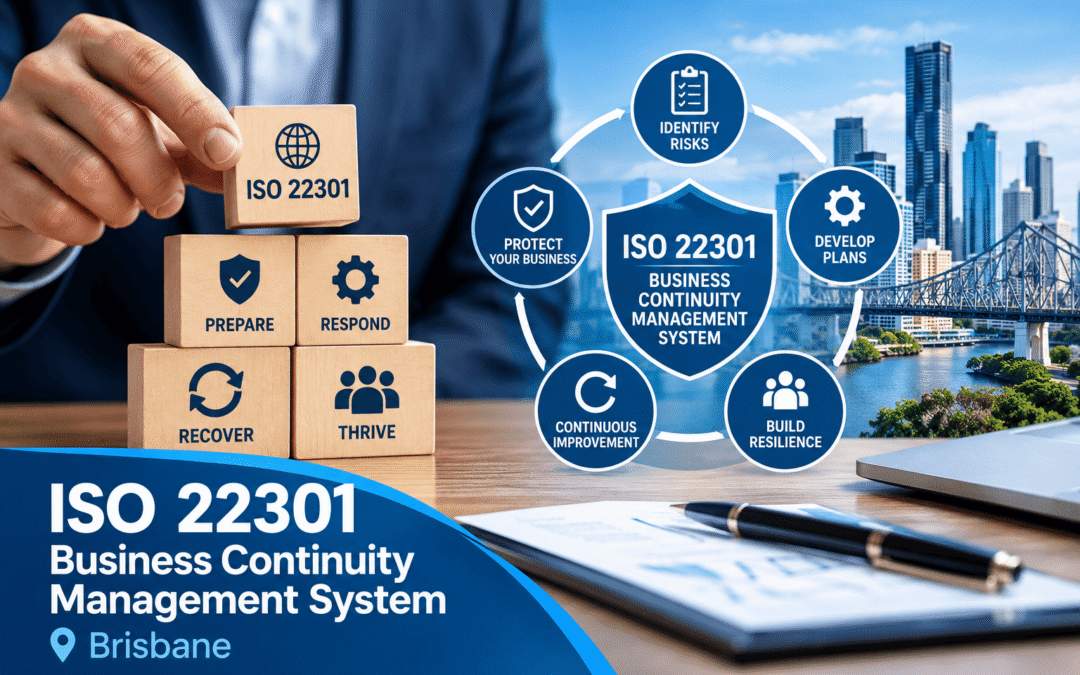
Every business needs a plan to continue operating when unexpected disruptions occur. Whether it is an IT outage, a supply chain delay, a natural disaster, equipment failure or another emergency, having a structured business continuity plan can help minimise downtime and protect essential operations.
For organisations seeking ISO 22301 Business Continuity Management System Brisbane services, implementing a Business Continuity Management System (BCMS) is an important step towards building operational resilience, improving risk management and maintaining customer confidence.
At Let Us Help IMCN, businesses can explore management system consultancy services to support their quality, safety, environmental, information security and business continuity objectives.
What Is ISO 22301 Business Continuity Management?
ISO 22301 is an international standard that specifies requirements for establishing, implementing, maintaining and continually improving a Business Continuity Management System.
The standard helps organisations prepare for disruptive incidents, respond effectively and recover their operations within acceptable timeframes. It provides a structured approach to identifying risks, analysing potential business impacts and developing appropriate continuity strategies.
ISO 22301:2019 is the published edition, with an amendment issued in 2024. Organisations should also monitor the ongoing revision of the standard when planning their implementation.
A well-designed BCMS helps ensure that business continuity is not simply an emergency response document but an integrated part of everyday business management.
Why Is ISO 22301 Important for Brisbane Businesses?
Businesses across Brisbane and Queensland operate in environments where unexpected events can affect staff, facilities, technology, suppliers and customers. A business continuity management system helps organisations prepare for these challenges rather than relying on last-minute decisions.
Key benefits include:
1. Improved Risk Management
ISO 22301 encourages businesses to identify threats that could interrupt essential activities. By understanding potential risks and their consequences, organisations can develop appropriate controls and contingency arrangements.
2. Reduced Operational Downtime
A documented continuity plan helps employees understand what to do when normal operations are disrupted. Clear procedures and recovery priorities can support a faster, more organised return to essential services.
3. Better Customer Confidence
Customers and business partners want to work with organisations they can depend on. A structured business continuity system demonstrates that an organisation takes operational resilience and service reliability seriously.
4. Clear Roles and Responsibilities
During an emergency, uncertainty can delay critical decisions. ISO 22301 supports defined responsibilities, communication arrangements and escalation procedures so employees understand their roles during a disruption.
5. Continual Business Improvement
Business continuity is an ongoing process. Regular testing, internal audits, management reviews and corrective actions help organisations identify weaknesses and strengthen their preparedness over time.
Key Components of an ISO 22301 Management System
Implementing an effective Business Continuity Management System involves several important activities.
Business Impact Analysis
A Business Impact Analysis (BIA) identifies critical business activities, the consequences of interruptions and the resources required to restore operations. It helps management establish recovery priorities and appropriate recovery time objectives.
Risk Assessment
Risk assessment examines potential events that could interrupt operations. These may include cyber incidents, power failures, supplier disruptions, severe weather, loss of premises and staff shortages.
The findings help an organisation determine which risks require attention and what continuity arrangements are appropriate.
Business Continuity Strategies
Organisations need practical strategies to maintain or restore essential operations. Depending on the business, these may include backup systems, alternative work locations, secondary suppliers, data recovery arrangements and cross-training employees.
Documented Plans and Procedures
A business continuity plan should explain how the organisation responds to a disruption, who makes key decisions, how staff are contacted and how essential services are maintained or restored.
Plans should be relevant to the organisation’s actual operations and easy for responsible personnel to access and follow.
Training and Testing
A documented plan is only useful when people understand how to implement it. Regular awareness sessions, scenario exercises and recovery tests help identify gaps and prepare employees for different situations.
Monitoring and Continual Improvement
Internal audits, performance monitoring, management reviews and corrective actions help ensure the BCMS remains effective as the business, its risks and its operating environment change.
Steps to Implement ISO 22301 in Brisbane
Businesses looking to establish an ISO 22301 Business Continuity Management System can follow a structured implementation process.
Step 1: Assess your current arrangements
Review existing risk management processes, emergency procedures, backup systems and recovery plans to identify gaps against the applicable standard.
Step 2: Define the scope
Determine which business activities, services, locations and functions will be included in the management system.
Step 3: Conduct a business impact analysis and risk assessment
Identify critical activities, assess disruption scenarios and determine recovery priorities.
Step 4: Develop continuity strategies and documentation
Prepare suitable policies, response procedures, communication plans, recovery arrangements and supporting records.
Step 5: Train employees and test the system
Make sure relevant employees understand their responsibilities and test the plans through realistic exercises.
Step 6: Conduct internal audits and management reviews
Evaluate the effectiveness of the system, address identified nonconformities and implement corrective actions.
Step 7: Prepare for certification, if required
Once the system is implemented and ready, the organisation may arrange an independent certification audit with an appropriate certification body. Certification is a separate process and should not be assumed until it has been successfully completed.
Who Can Benefit from ISO 22301?
ISO 22301 can be applied to organisations of different sizes and across a wide range of industries. In Brisbane, it may be particularly relevant to:
- Professional and business service providers.
- Construction and engineering companies.
- Manufacturing and industrial organisations.
- Information technology and managed service providers.
- Logistics, warehousing and supply chain businesses.
- Healthcare and other essential service providers.
- Organisations supplying services to government or large corporate clients.
The scope and complexity of implementation should reflect the organisation’s size, activities, risks and continuity requirements.
Why Choose an Experienced ISO Consultancy?
Developing a business continuity management system requires an understanding of the standard and how its requirements apply to real business operations.
An experienced consultant can help an organisation assess its current arrangements, identify implementation gaps, prepare relevant documentation, establish practical procedures and develop an audit-readiness plan.
For businesses considering ISO 22301 Business Continuity Management System Brisbane support, Let Us Help IMCN provides management system consultancy services and lists ISO 22301:2019 Business Continuity Management among the standards it supports.
Working with a consultant can help make the implementation process more structured and ensure the management system is designed around the organisation’s operational needs rather than unnecessary paperwork.
Build a More Resilient Business with ISO 22301
Unexpected disruptions cannot always be prevented, but businesses can take practical steps to prepare for them. A well-implemented Business Continuity Management System helps organisations understand their risks, protect essential activities, clarify responsibilities and improve their ability to recover.
If your organisation is considering ISO 22301 implementation in Brisbane, start by reviewing your current continuity arrangements and identifying where improvements are needed.
Visit Let Us Help IMCN to learn more about management system consultancy services and discuss how a structured approach to business continuity can support your organisation’s resilience and long-term objectives.
Prepare today to keep your business moving tomorrow.
Frequently Asked Questions
What is ISO 22301 certification?
ISO 22301 certification is an independent assessment confirming that an organisation’s Business Continuity Management System conforms to the applicable requirements of the standard within the defined certification scope.
Is ISO 22301 suitable for small businesses?
Yes. The standard is applicable to organisations of different sizes. The implementation approach should be proportionate to the business’s complexity, risks and continuity needs.
How long does ISO 22301 implementation take?
The timeframe depends on the organisation’s size, existing processes, operational complexity, documentation and readiness. A gap assessment can help establish a realistic implementation schedule.
Is certification compulsory?
ISO 22301 certification is not universally compulsory. However, particular customer contracts, procurement requirements or industry expectations may make certification desirable or necessary for specific business relationships.
What is the difference between a business continuity plan and a BCMS?
A business continuity plan describes how an organisation will respond to and recover from disruptions. A BCMS is the broader management framework that establishes policies, responsibilities, risk assessments, plans, testing, performance evaluation and continual improvement.